
Our system comes directly from the Doce Pares International Headquarters in Cebu, Philippines. We specialise in single and double sticks, long and short weapons, knife defence, and empty hand combat.
We follow the official 5-year curriculum of Supreme Grandmaster Dionisio Cañete (ODL). Eskrima — also known as Arnis or Kali — is an indigenous Filipino martial art that trains with weapons such as sticks (single and double), knives and daggers, espada y daga (sword and dagger), bangkaw (staff or spear), as well as mano-mano (empty hands: striking, locks and immobilisation, takedowns and grappling). It is a complete system on its own.
Doce Pares itself is a blend of styles introduced by its founding masters in 1932. These diverse skills were successfully integrated into a single system, preserved and passed down through generations. Today, all Doce Pares International schools share the same seal and logo, and most importantly, teach the unique 5-year multi-style programme that covers all of the original founding styles.
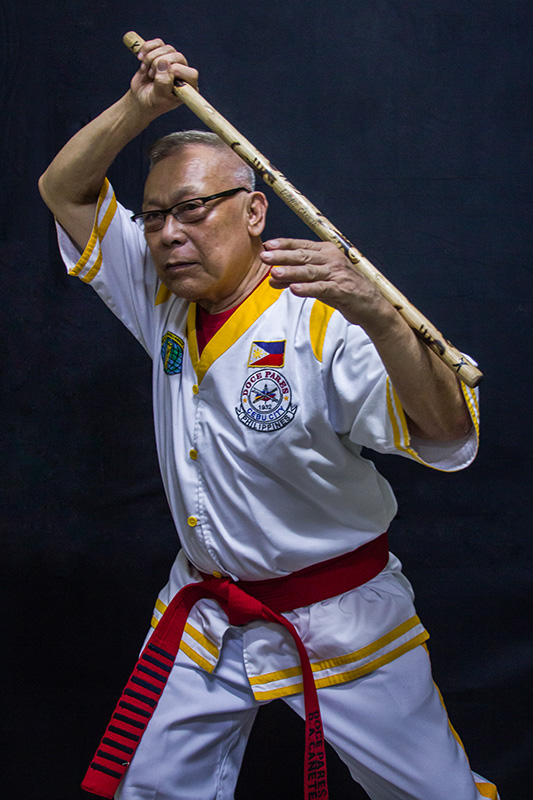
Over the years, the Doce Pares system has often been a source of confusion, with different interpretations emerging within the organisation. Today, three main branches are recognised. The San Miguel style is currently headed by Grandmaster York Cañete. The Cacoy Doce Pares system is led by Grandmaster Chuck Cañete. The Multi-Style system is overseen by Grandmaster Gerald Cañete. Each branch carries forward the legacy of the founding masters of 1932, while reflecting the leadership and emphasis of its present heads.
This situation is understandable. Doce Pares was founded in 1932 as a gathering of masters, each bringing their own art into one organisation. Naturally, many instructors and masters today focus on teaching only the particular style of their original teacher. Each founding master had his own set of followers, and those students who did not cross-train with others became specialists in a single method.
Doce Pares was, in many ways, a “supermarket” of Eskrima styles. Among them were the Larga Mano of Eulogio Cañete, the Espada y Daga of Felimon Cañete and Jesus Cui, the Corto Linear of Teodoro Saavedra and later Venancio Bacon, Delfin Lopez and Timoteo Maranga, the Corto Orihinal and Media Largo of Felimon and Iluminado Cañete, the Hirada and Retirada of Vicente Carin and Ponciano Ybañez, the Mano-Mano and Baraw of Maximo Cañete and Jesus Cui, and the Corto Kurbada and Abaniko of Ciriaco and Felimon Cañete.
Because of this diversity, it is not unusual to find masters today who promote only one of these styles while still belonging to the Doce Pares family. To address this, in the early 1970s, Eulogio Cañete, then President of Doce Pares, commissioned his son, Dionisio “Diony” Cañete, to develop a structured programme that would preserve and present all of the component styles equally. The aim was to create a training curriculum that honoured each founding master while uniting their contributions in a single system.
This gave birth to the Multi-Style System, a curriculum that reflected the breadth of Doce Pares. It was a natural fit for Grandmaster Diony, who, along with his three elder brothers, had been among the fortunate few to study directly under many of the original masters when Doce Pares was first formed in 1932.
Today, Hybrid FMA proudly follows this Multi-Style System. Our students train in the full spectrum of traditional Doce Pares styles, preserving the legacy of the founding masters while applying the system in a modern, structured, and practical way.
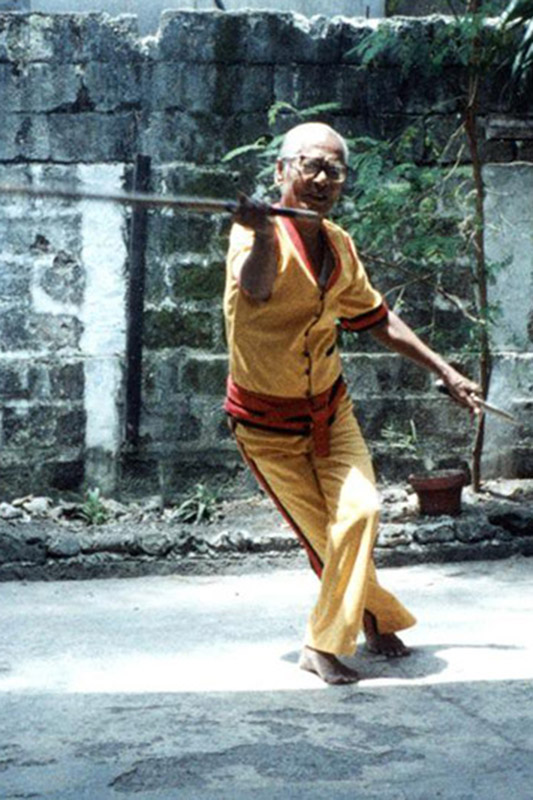
For students interested in grading, we follow a structured 5 year curriculum designed by the late Supreme Grandmaster Dionisio Cañete.
Grade 1 – White belt
Grade 2 – Yellow belt
Grade 3 – Orange belt
Grade 4 – Green belt
Grade 5 – Blue belt
Grade 6 – Purple belt
Grade 7 – Brown belt
Grade 8 – Brown belt 1
Grade 9 – Brown belt 2
Grade 10 – Brown belt 3
Grade 11 – Black belt 1st degree
Grade 12 – Black belt 2nd degree
Grade 13 – Black belt 3rd degree